Digital Marketing Agency Website Design: Building a Powerful Online Presence
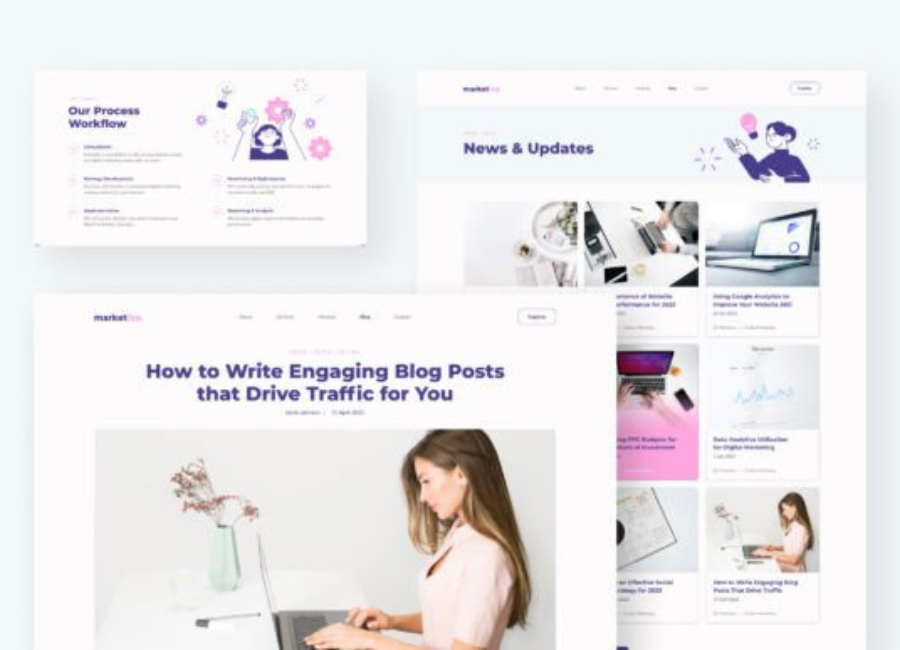
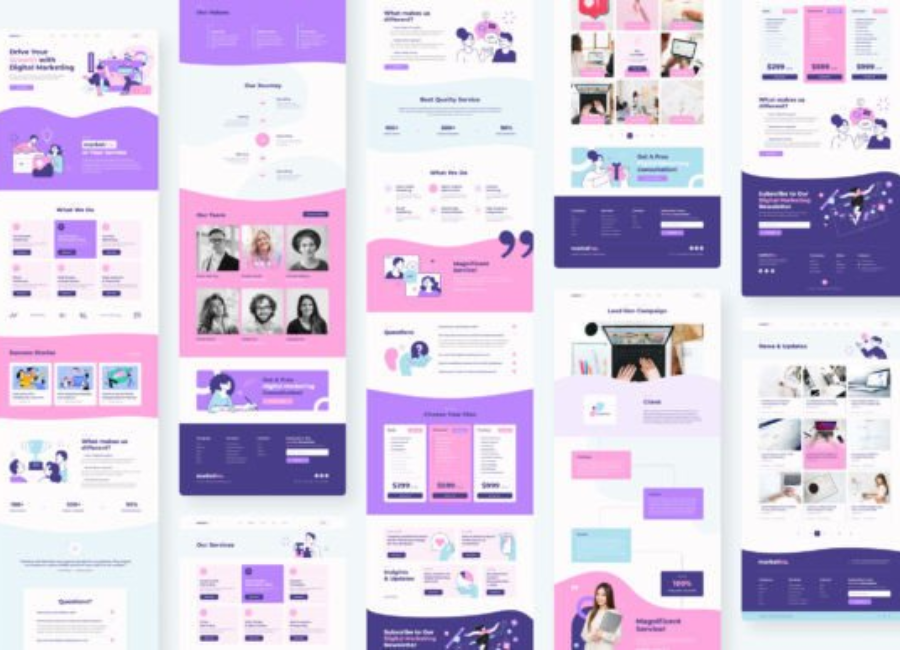
In the digital-first business landscape, a website is more than just an online brochure—it is the foundation of a brand’s digital identity. For a digital marketing agency, website design plays a critical role in showcasing expertise, building trust, and converting visitors into clients. A well-designed digital marketing agency website communicates credibility, highlights services, and demonstrates the agency’s ability to deliver measurable results.
Why Website Design Matters for Digital Marketing Agencies
Digital marketing agencies sell creativity, strategy, and performance. If an agency’s website fails to impress or function properly, it can instantly damage credibility. Potential clients often judge an agency’s skills by the quality of its website. A clean, modern, and conversion-focused design reassures visitors that the agency understands digital trends and user behavior.
Moreover, the website often serves as the primary lead generation tool. Every design choice—from layout to call-to-action placement—impacts how users interact with the site and whether they choose to contact the agency.
Key Objectives of a Digital Marketing Agency Website
An effective agency website is built around clear objectives:
Showcase Expertise: Highlight skills in SEO, PPC, social media, content marketing, and web design.
Build Trust: Display testimonials, case studies, and client logos.
Generate Leads: Encourage visitors to request quotes, book consultations, or subscribe to newsletters.
Demonstrate Results: Use data, metrics, and success stories to prove effectiveness.
The design should guide users seamlessly toward these goals.
Essential Elements of a High-Performing Agency Website
1. Clean and Modern Visual Design
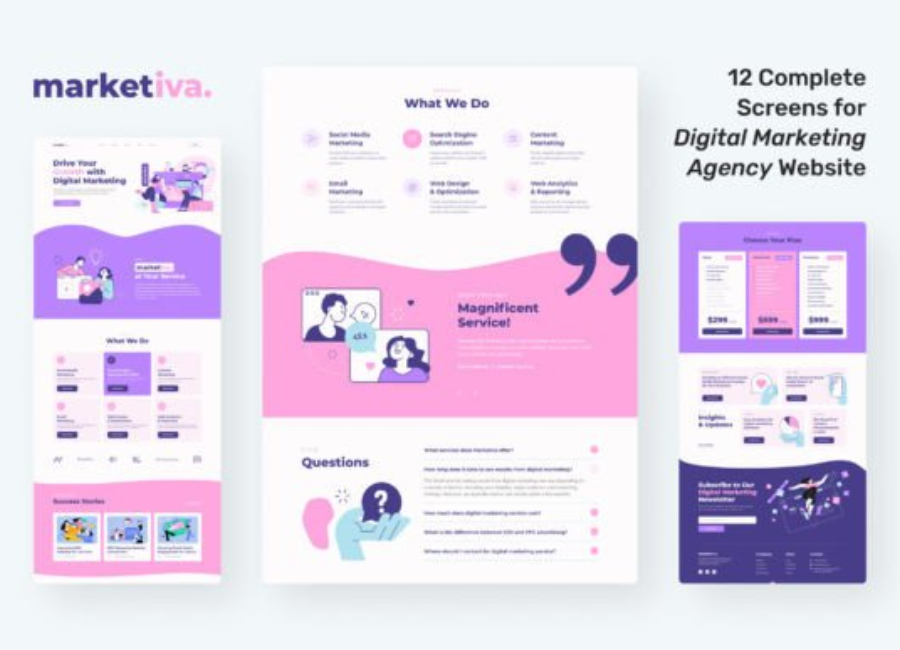
A digital marketing agency website should reflect modern design trends. Minimal layouts, bold typography, balanced white space, and consistent color schemes help create a professional look. Visual hierarchy is essential to direct attention to key messages and calls to action.
2. Clear Brand Identity
Strong branding helps an agency stand out in a competitive market. The website should consistently use brand colors, fonts, tone of voice, and imagery. This consistency reinforces brand recognition and builds trust.
3. User-Friendly Navigation
Simple and intuitive navigation ensures visitors can easily find information. Services, case studies, pricing, and contact pages should be accessible within a few clicks. A confusing layout can drive potential clients away.
4. Compelling Hero Section
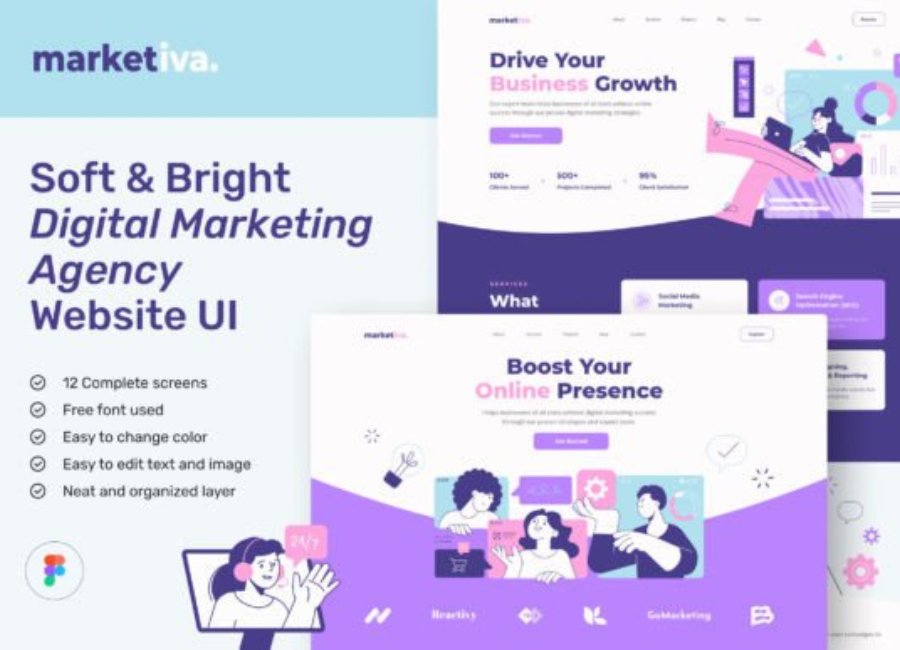
The hero section is the first thing visitors see. It should clearly communicate what the agency does, who it helps, and what makes it different. A strong headline, supporting text, and a clear call to action can significantly improve engagement.
Conversion-Focused Design Strategy
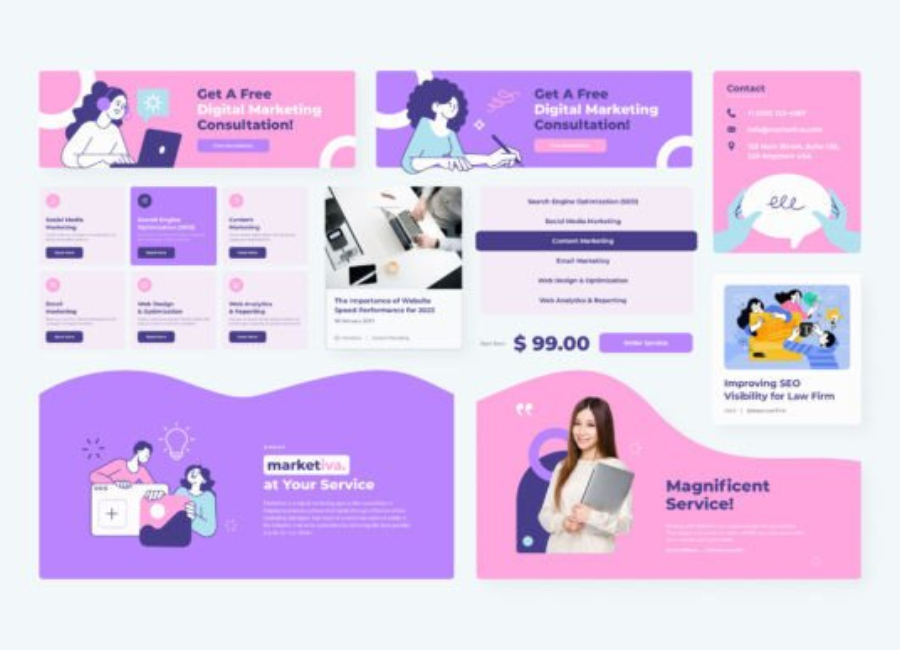
A digital marketing agency website should be designed with conversions in mind. This means strategically placing calls to action such as “Get a Free Consultation,” “Request a Proposal,” or “Book a Call.” Forms should be short and easy to complete, reducing friction for users.
Trust signals—such as testimonials, reviews, certifications, and awards—should be placed near conversion points to reassure visitors. Live chat and chatbots can also improve conversion rates by offering instant assistance.
Mobile Responsiveness and Performance
With the majority of users browsing on mobile devices, responsive design is no longer optional. A digital marketing agency website must perform flawlessly across all screen sizes. Mobile-friendly layouts, fast loading times, and touch-optimized buttons enhance usability and user satisfaction.
Page speed is another critical factor. Slow websites increase bounce rates and negatively impact search engine rankings. Optimized images, clean code, and reliable hosting contribute to better performance.
SEO-Optimized Website Design
Search engine optimization should be integrated into the website design process from the start. Proper use of heading structures, meta tags, image alt text, and internal linking improves search visibility. A well-structured website helps search engines crawl and index content more effectively.
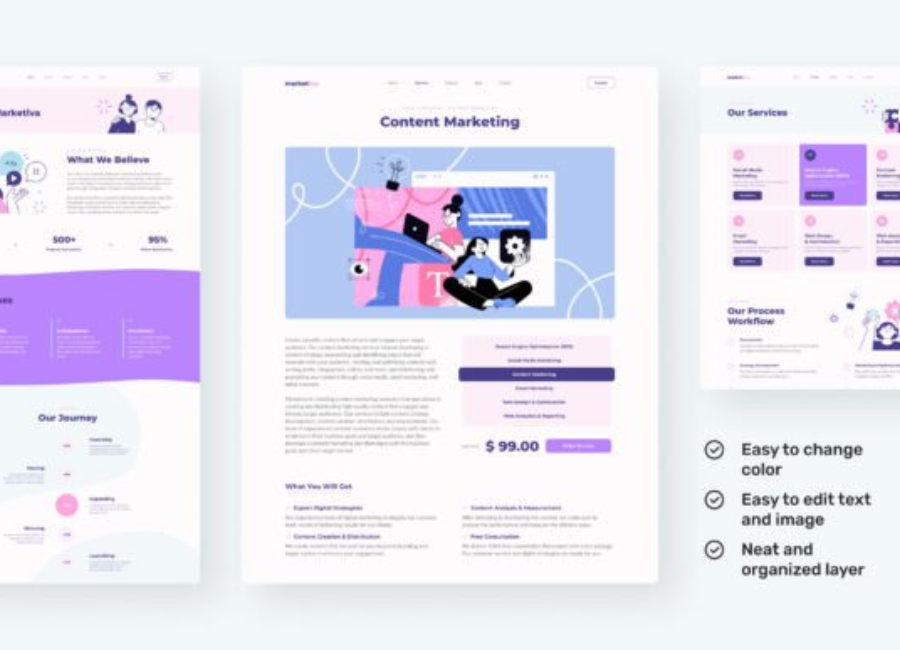
Additionally, creating dedicated service pages for SEO, PPC, social media marketing, and content marketing allows agencies to target specific keywords and attract qualified traffic.
Showcasing Case Studies and Portfolios
Case studies are one of the most powerful tools for a digital marketing agency website. They demonstrate real-world results and provide proof of expertise. A well-designed case study page should include the client’s challenge, the strategy implemented, and the measurable outcomes.
Visual elements such as graphs, screenshots, and before-and-after comparisons enhance storytelling and make the content more engaging.
Content Strategy and Visual Storytelling
High-quality content is essential for educating visitors and positioning the agency as an industry authority. Blog sections, guides, and resources help drive organic traffic and build credibility.
Visual storytelling—through icons, illustrations, videos, and animations—can simplify complex ideas and keep users engaged. Motion effects, when used thoughtfully, add interactivity without overwhelming the user.
Security and Technical Reliability
Security is a crucial consideration for any professional website. SSL certificates, secure forms, and regular updates protect user data and build trust. For digital marketing agencies, technical reliability reflects professionalism and attention to detail.
Future-Proofing the Website
A successful digital marketing agency website should be scalable and easy to update. As services evolve and trends change, the website must adapt. Flexible content management systems and modular design approaches allow agencies to update content without redesigning the entire site.
Emerging trends such as AI-driven personalization, interactive dashboards, and data visualization may also shape future agency website designs.
Conclusion
Digital marketing agency website design is a strategic investment, not just a creative exercise. A well-designed website enhances brand credibility, attracts qualified leads, and showcases the agency’s expertise in a highly competitive market. By combining modern design principles, conversion-focused strategies, strong content, and technical excellence, digital marketing agencies can create websites that not only look impressive but also deliver real business results.
In an industry built on digital performance, the agency website should be a living example of what the agency can achieve for its clients.