Luxury Chocolate Truffle Box Mockup — The Ultimate Guide for Designers & Brands (1500 Words)
In premium confectionery and chocolate branding, packaging plays a central role in shaping customer perceptions. For luxury chocolate truffles — often handcrafted, rich in flavor, and offered at a higher price point than standard chocolates — the packaging must communicate quality, sophistication, and exclusivity. That’s where a Luxury Chocolate Truffle Box Mockup becomes indispensable. A mockup allows designers, brand managers, and chocolatiers to visualize and present packaging designs before committing to production, combining realism with ease of customization.
In this article we’ll explore everything you need to know about luxury chocolate truffle box mockups — what they are, why they matter, how to use them effectively, and best practices for making packaging design stand out in competitive markets.
1. What Is a Luxury Chocolate Truffle Box Mockup?
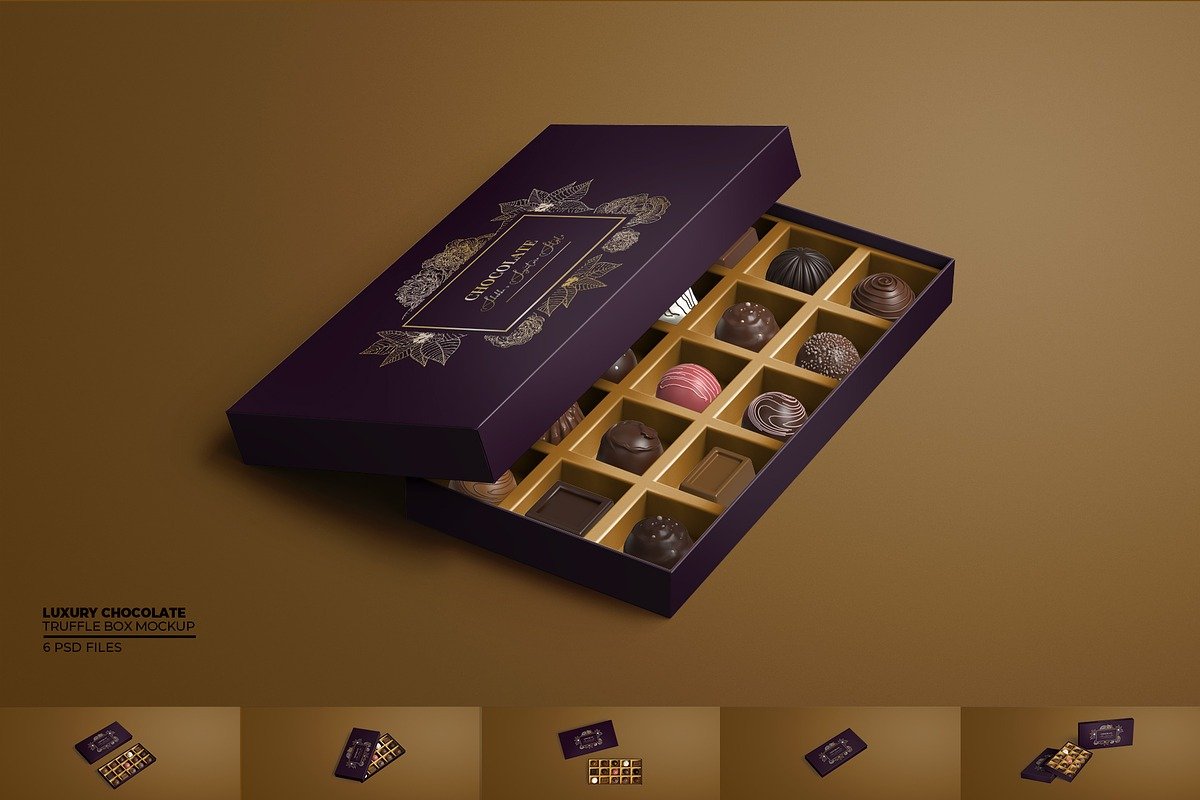
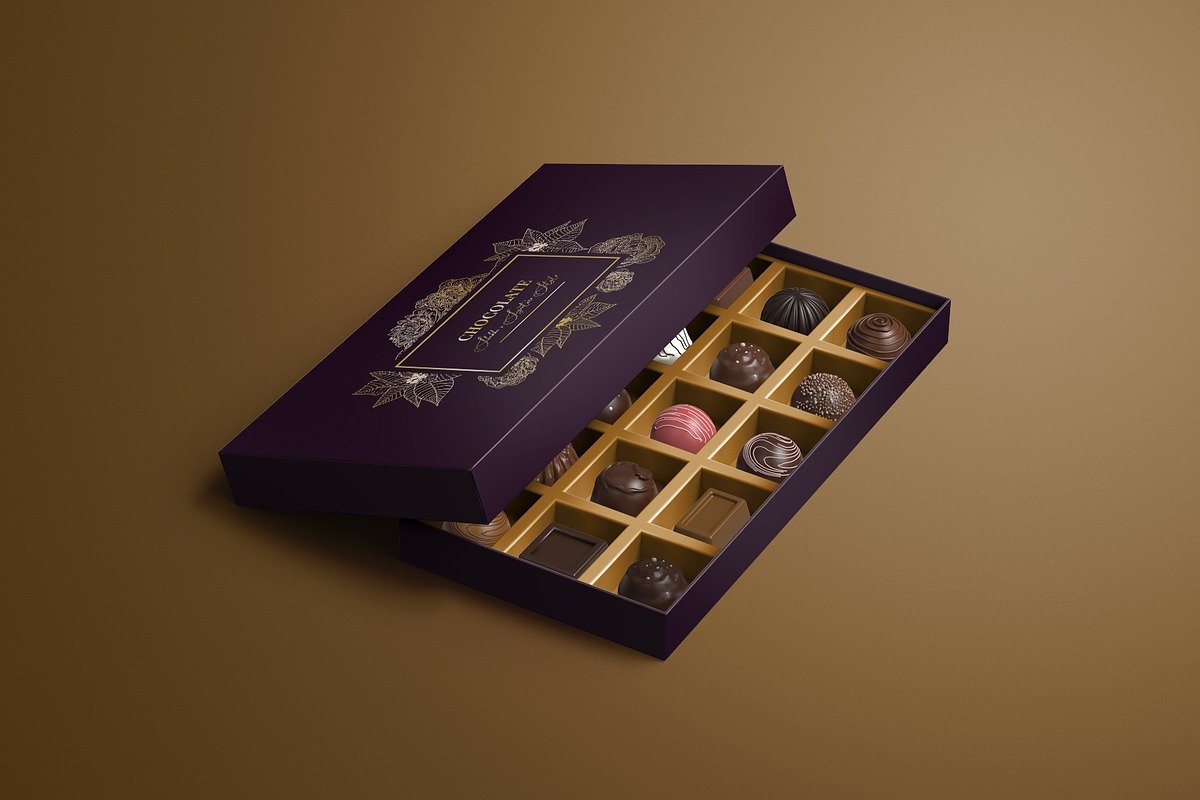
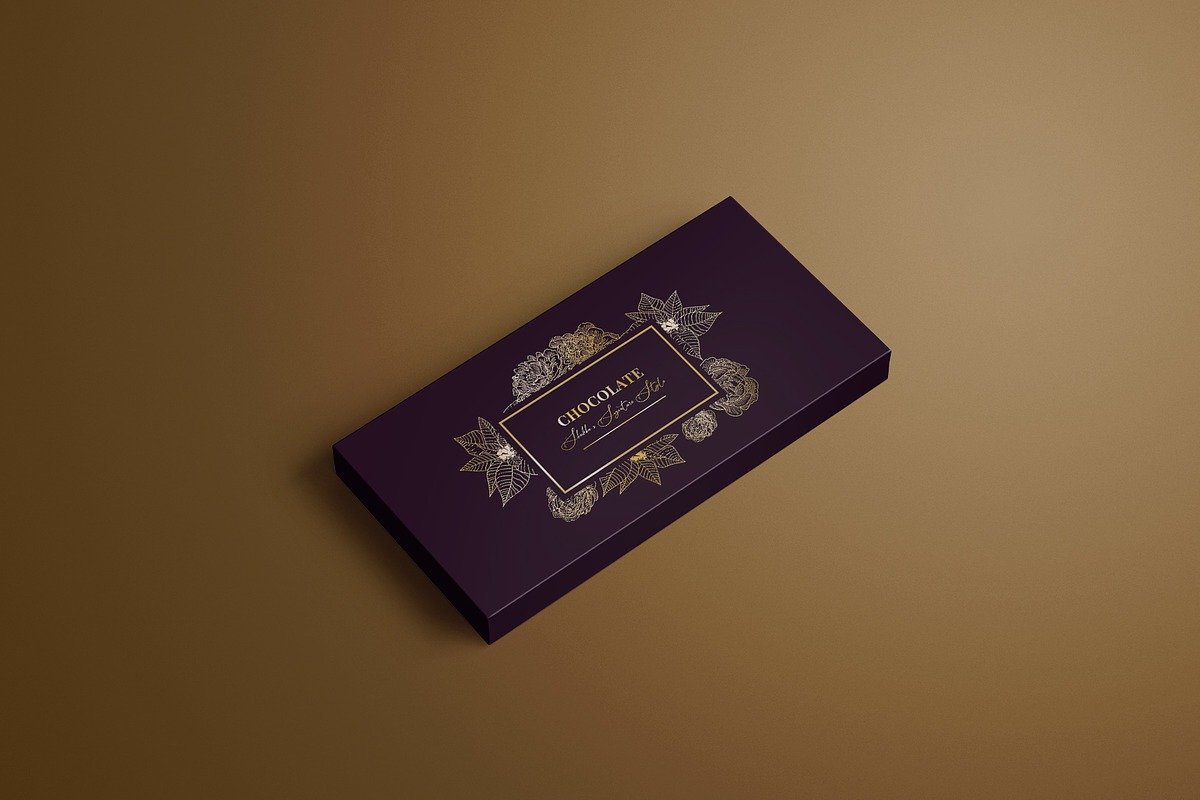
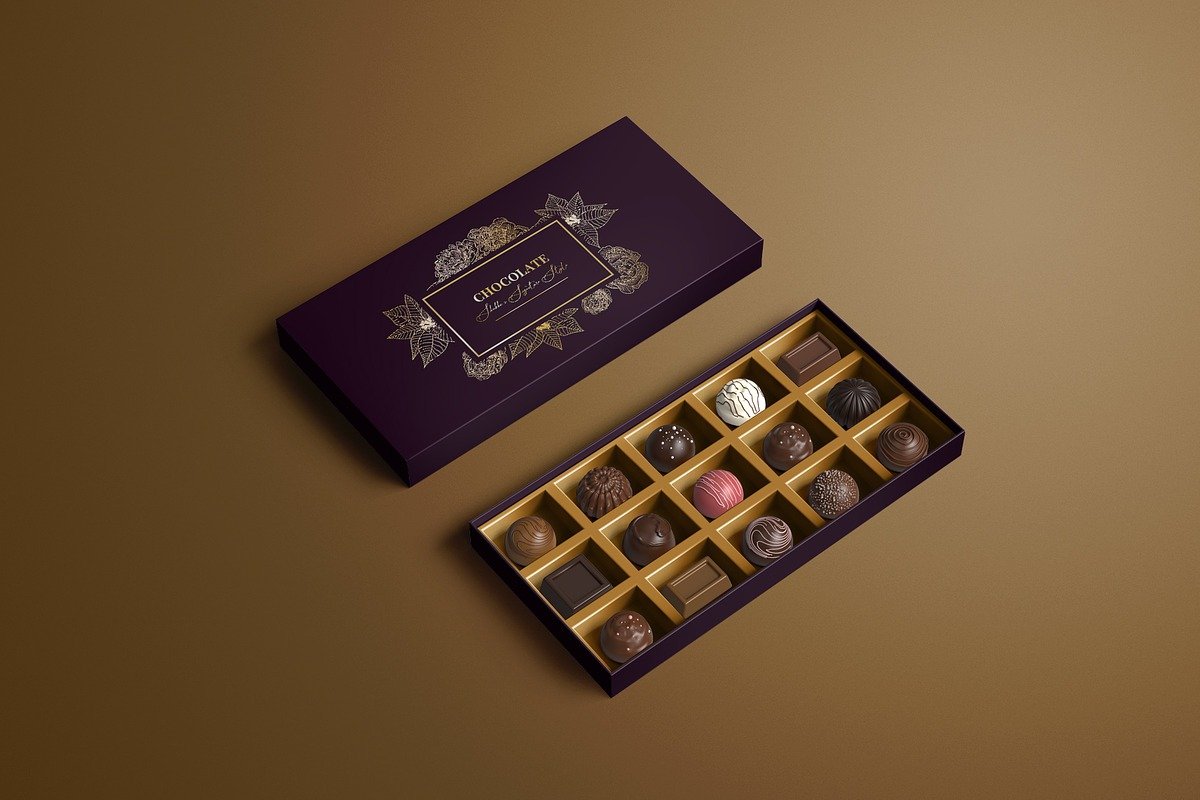
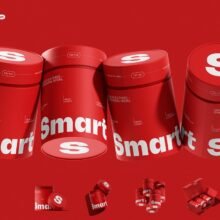
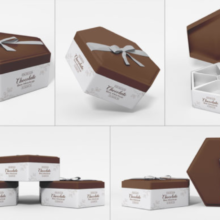
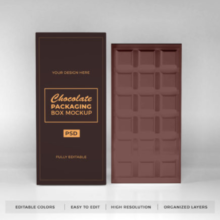
A Luxury Chocolate Truffle Box Mockup is a digital design template — usually in Photoshop (PSD) or similar formats — that represents a premium box designed to hold truffle chocolates. These mockups simulate realistic shadows, lighting, material textures, and proportions so your artwork appears as if it were on a real physical product.
These mockups typically feature smart object layers, which enable designers to insert their own artwork — logos, patterns, typography, colors, and more — with just a few clicks. The result is a photorealistic visualization that looks like a professional photograph of the actual packaging, except it can be altered infinitely without the need for physical prototypes.
For luxury brands — especially those targeting gift markets, corporate giveaways, or boutique retail environments — the visual presentation of chocolates can make a huge difference in how well the product is received. A mockup, therefore, bridges the gap between a flat design file and a tangible experience.
2. Why Luxury Truffle Box Mockups Matter
Mockups are more than pretty visuals — they are strategic tools that serve multiple purposes:
A. Visual Realism and Persuasion
A mockup transforms a flat design into a three-dimensional representation. This gives clients, stakeholders, or consumers a sense of how the packaging will feel and look in reality. Shadows, reflections, materials, and lighting all contribute to a perception of quality that flat designs can’t match.
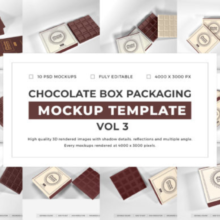
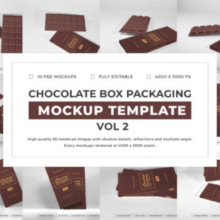
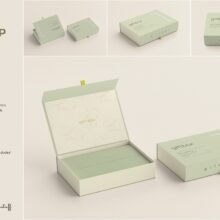
For example, a luxury truffle box mockup on Creative Market showcases a high-resolution, photorealistic representation of a premium box with editable backgrounds and shadow layers — ideal for reflecting the high-end positioning of a chocolate brand.
B. Client or Stakeholder Alignment
Often, clients struggle to translate a flat Illustrator file or PDF into a mental picture of the final product. A mockup closes that gap immediately, reducing revisions and aligning expectations early in the design process.
C. Marketing, E-Commerce, and Social Media
Mockups are essential assets for online stores, catalogs, social feeds, and digital ads. They help convey luxury visually — the subtle sheen on a velvet box, the foil stamping on a logo, or the rich textures of eco-friendly materials — all of which enhance brand storytelling.
D. Faster Iteration and Prototyping
Instead of waiting for printed samples, designers can iterate packaging ideas rapidly, saving time and cost. This allows exploration of multiple creative directions and helps spot visual issues like color contrast, logo placement, or readability before production.
3. Anatomy of a Great Luxury Truffle Box Mockup
While mockup features vary, the best ones share core components that make them effective for professional use:
1. High Resolution
High resolution ensures that the mockup can be used for both digital and print materials without loss of detail. Many premium mockups feature 300 dpi or more, ideal for portfolios, banners, and larger format displays.
2. Smart Object Layers
Smart objects make it simple to replace the mockup design with your own artwork. Designers can double-click on the smart layer, paste in their artwork, save, and instantly see the design applied in 3D context.
3. Editable Background & Shadows
Controllable backgrounds allow designers to match brand colors or marketing contexts. Separated shadow layers make it possible to create different moods, from minimal white studio looks to rich textured scenes.
4. Multiple Angles & Perspectives
A complete mockup set often includes different camera angles — front, angled, close-up — allowing designers to highlight details like embossing, foil stamping, or interior textures.
5. Organized Layers and Clear Naming
A well-structured PSD file helps you find relevant layers quickly and keeps the workflow efficient, especially when collaborating with other designers or agencies.
Luxury chocolate truffle box mockups come in various styles and formats based on presentation goals:
A. Classic Gift Box Mockups
These show a truffle box with a hinged lid or a lid and tray mechanism. These are most common for premium boxed assortments and corporate gifts.
B. Sliding Drawer Box Mockups
A more upscale style mimicking high-end jewelry packaging. These mockups visually differentiate the unboxing experience and suit brands focused on gourmet presentation.
C. Open/Closed View Mockups
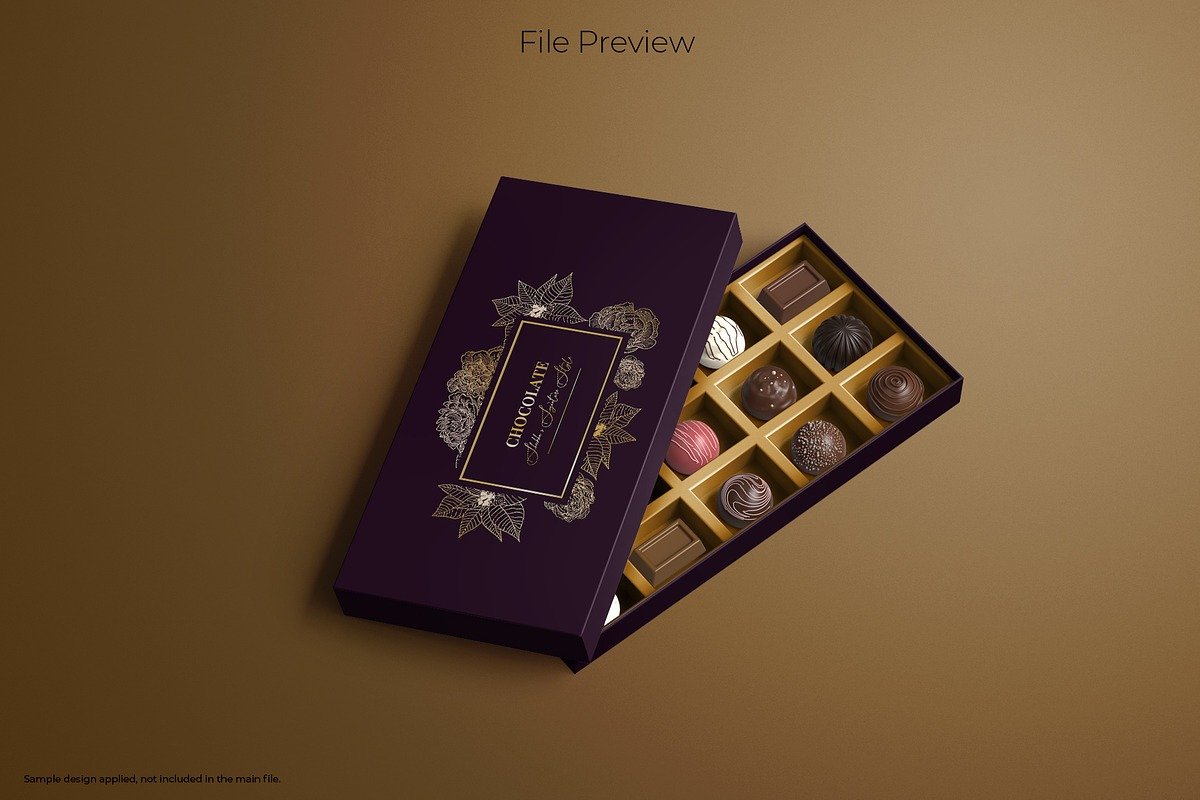
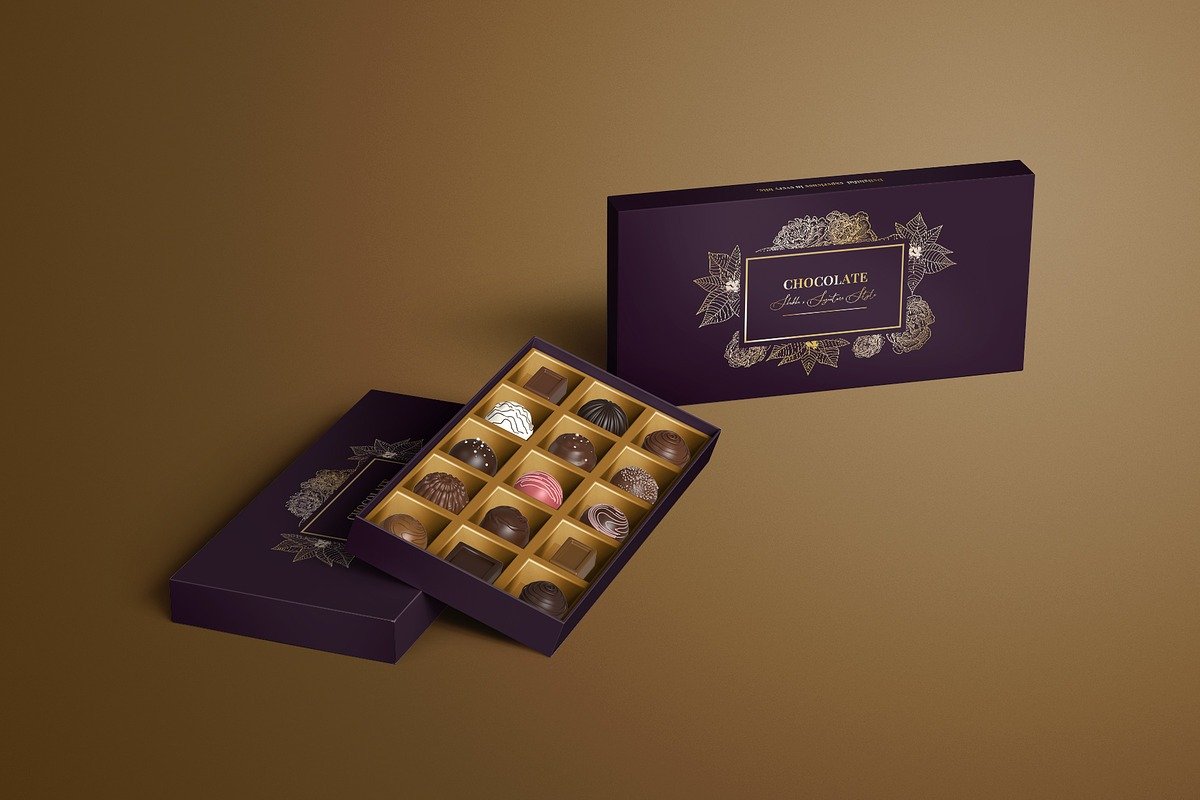
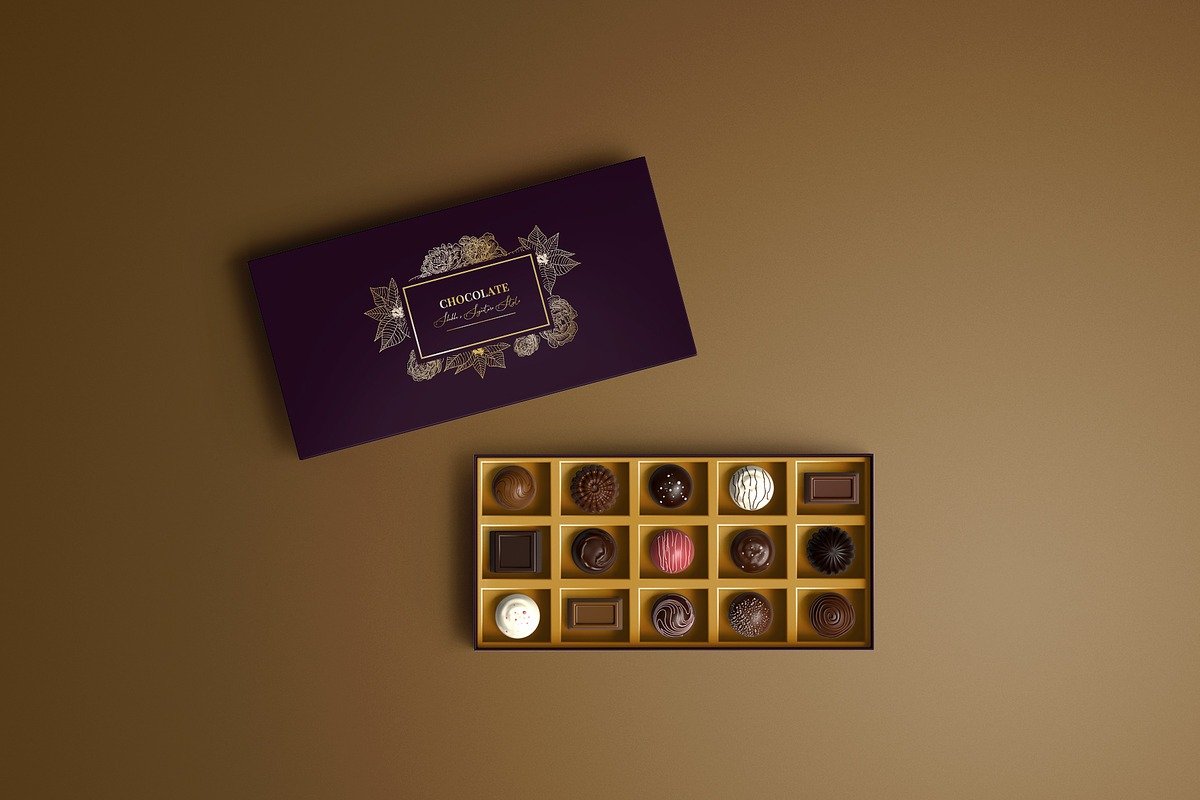
Some mockup sets provide both closed and open presentations. The open view reveals the chocolates inside — ideal for advertising and showcasing premium interior design.
D. Lifestyle Scene Mockups
These include background elements like ribbons, silk fabrics, cocoa beans, and luxury props, creating a context that visually reinforces the premium nature of the product.
5. Step-by-Step: Using a Luxury Truffle Box Mockup
Here’s a typical workflow for customizing a mockup:
1. Open the Mockup File
Install Adobe Photoshop (version CS6 or later) and load the PSD mockup file. Premium mockups often include a help file with instructions.
2. Access Smart Object Layers
Locate the smart object layer where your artwork will go. This is usually clearly labeled, such as “Design Here” or “Your Artwork.”
3. Paste Your Artwork
Double-click the smart object, paste your logo/design inside, adjust for scale and alignment, then save and close that window. Photoshop will automatically wrap your design onto the mockup.
4. Customization and Enhancements
Adjust background, shadows, highlights, and color grade to match the brand aesthetic or campaign theme.
5. Export for Presentation
Save in appropriate formats — high-quality JPEG or PNG for web and social media, or TIFF for print and portfolios.
6. Best Practices for Luxury Packaging Mockups
Creating impactful visuals means going beyond mere application — here are professional tips:
✔ Choose the Right Mockup Style
Match the mockup style with your target audience. Classic minimalist mockups work well for high-end or corporate gifting, while lifestyle scenes are great for holiday promotions.
✔ Focus on Material Realism
Pay attention to materials: matte vs. gloss, metallic foil, embossing details — they all affect visual perception. A luxury presentation demands subtlety and sophistication.
✔ Use Multiple Views
Presenting front, top-down, and angled views builds trust and gives a complete visual understanding of the packaging.
✔ Maintain Consistent Branding
Ensure color, typography, and imagery align with overall brand identity. A well-presented mockup reinforces brand recognition.
✔ Optimize for Platform
Export versions optimized for where they’ll be displayed — web, print, or mobile — while maintaining visual fidelity.
7. Where to Find Luxury Truffle Box Mockups
There are many online resources offering both free and premium mockups:
A. Premium Marketplaces
Sites like Creative Market provide high-quality, photorealistic mockup sets designed for professional packaging projects.
B. Free Mockup Templates
Platforms like GoodMockups and DG MOCKUP offer free PSD mockups you can use for personal and commercial projects, often with editable smart objects.
C. Mockup Libraries
Design communities and libraries frequently share free mockups that work well for chocolate packaging and luxury product visuals.
8. Common Pitfalls to Avoid
Understanding common mistakes helps elevate your mockups:
Inappropriate Proportions
Match the physical dimensions of your design with your mockup’s proportions — mismatch can lead to unrealistic representation.
Over-Decorating
Too many props can distract from the packaging itself. Focus should remain on conveying luxury and brand essence.
Ignoring Color Calibration
Colors appear differently across screens. Always test on calibrated monitors to ensure consistent presentation.
9. The Role of Mockups in Branding and Sales
A luxury chocolate box is more than packaging — it’s a part of the brand experience. For high-end truffles, the box itself is often perceived as part of the gift. A beautiful mockup not only helps with design but also sells a story — a story of craftsmanship, indulgence, and premium quality.
Whether used in e-commerce listings, social media campaigns, or client proposals, well-executed mockups elevate perceived value and help justify a premium price point. They aren’t just design tools — they are strategic brand assets.
10. Final Thoughts
A Luxury Chocolate Truffle Box Mockup is an invaluable asset for packaging designers, brand managers, and chocolatiers aiming to communicate sophistication and desirability visually. Mockups transform flat artwork into photorealistic presentations that captivate clients and customers alike, helping bridge the gap between conceptual design and real-world experience.
From photorealistic lighting and smart object editing to flexible backgrounds and multiple perspectives, mockups bring luxury packaging to life — all while saving time and resources. Whether you’re designing a new line of truffles, refreshing your brand packaging, or preparing visuals for marketing, mastering mockups puts you ahead in the competitive world of gourmet confectionery design.